You are reading a saved edition, not live news. News window: 25 Sept, 06:15 UTC to 26 Sept, 06:15 UTC. Labelled ongoing and upcoming items retain their own dates.
The catch-up
News from the last 24 hours, plus clearly dated ongoing developments and upcoming events.
Aave V4 on Base now accepts seven Coinbase stock tokens as USDC collateral
@aave said Coinbase Tokenized Stocks are live on Aave V4 on @base. Aave’s blog lists seven tokens, AAPLc, AMZNc, GOOGLc, METAc, MSFTc, NVDAc and TSLAc, as collateral for borrowing USDC. Each token is a Coinbase certificate over shares held at Alpaca Securities, and dividends are reinvested into more shares. @chainlink price feeds update during U.S. market hours and hold the last price over weekends and holidays. The stock tokens cannot themselves be borrowed. @base said they are available only in eligible places outside the United States. The posts do not show how much has been borrowed.
Robinhood says its Earn vault passed $500 million, the largest on Morpho
@RobinhoodApp said Robinhood Earn’s vault now holds more than $500 million and is the largest vault on @Morpho. Earn is Robinhood’s in-app lending product: eligible users lend through a self-custody wallet on Morpho, an independent protocol. The product page shows an estimated 7% APY, no lock-up, and no Robinhood fee, and says a withdrawal depends on vault liquidity. Limited cover from Lloyd’s of London and RELM may apply to some cyber or smart-contract losses. The post does not name the asset, the chain, or a public breakdown of the $500 million.
Why it matters A brokerage app reporting more than $500 million in one Morpho vault is a concrete adoption figure. Readers can compare that claim with the Earn page and with Morpho, and weigh the estimated yield against liquidity and the limited insurance.
Morpho’s 1 July 2026 launch post said Earn deposits USDG, a dollar-pegged stablecoin, into a Steakhouse-curated Morpho vault that settles on Robinhood Chain, with a gradual rollout to eligible U.S. customers. Friday’s post does not repeat those details. Robinhood’s Earn page says the wallet is offered by Robinhood Non-Custodial, Ltd. in the Cayman Islands, the user manages it with Privy, and the balances are not FDIC or SIPC protected. Lending is not available in every jurisdiction. The 7% figure is an estimate on the product page, not a promised rate.
Catalyst says event markets are live on Robinhood Chain
@CatalystMkts_ said Catalyst is now live on Robinhood Chain, with event-driven markets tied to real-world events, at catalyst.markets. @RobinhoodCrypto reposted the announcement the same minute. Catalyst describes itself as markets for moments. The posts do not list the events, the collateral, the fees, or any trading volume, and they do not show a completed trade.
Why it matters Robinhood’s crypto account pointing at a new event market gives readers a specific Robinhood Chain app to open. The announcement says the markets are live. It still leaves the order book, the event list, and any restrictions for the reader to check on the site.
Robinhood Chain is Robinhood’s Ethereum layer-2 network for onchain trading and apps. Catalyst is a third-party market, not a Robinhood brokerage product. The launch post is the project’s own claim, amplified by @RobinhoodCrypto. Readers can start at catalyst.markets. Nothing in these posts shows how large the markets are or which real-world events are listed.
Upcoming: 29 Sept, 22:30 UTC. Announced 16 Sept, 15:49 UTC.
Robinhood will livestream HOOD Summit on 29-30 September for new active-trader tools
@RobinhoodApp told followers to tune in 29-30 September. Official pages put HOOD Summit '26 in Houston, with Chairman and CEO Vlad Tenev's keynote at 5:30 p.m. Central on 29 September, livestreamed in the Robinhood app, on X, YouTube and robinhood.com/presents. The company says the keynote will show new tools for active traders, and that 30 September main-stage sessions will also stream. No product list, including any Robinhood Chain feature, has been published. The dates are announced, not a guaranteed launch.
Why it matters This is a scheduled product window for Robinhood users and anyone watching Robinhood Chain, not a live button. Treat social rumors as unverified until the livestream names what is shipping, where, and when.
Robinhood Chain is Robinhood's permissionless Ethereum Layer 2, built on Arbitrum technology, using ETH for gas and aimed at tokenized stocks and onchain apps. HOOD Summit is the company's annual event. A 10 August newsroom post already set Houston for 29-30 September. The 16 September teaser does not change those dates. In late September, Central Time is daylight time (UTC-5), so 5:30 p.m. CT is 22:30 UTC. Specific chain, wallet or brokerage features remain unnamed until the keynote.
Anza says Alpenglow is running on Solana devnet and TowerBFT is retired
@anza_xyz said Alpenglow is running on Solana devnet. The handoff finished at slot 504148999: an Alpenglow genesis block formed, and TowerBFT was retired on that cluster. Anza told app developers to test programs and integrations during an observation period leading to a mainnet-beta migration. @solana reposted the result. Anza linked the devnet genesis block in Solana Explorer. No mainnet-beta date was given. This handoff does not move real-funds mainnet-beta.
Why it matters Devnet is where many app teams first run their own code against a network change. A second cluster has now retired TowerBFT, after testnet did so on 24 September. Funds on mainnet-beta still follow the old rules until Anza sets a date.
Alpenglow is Solana’s consensus rewrite, built by Anza, the firm behind the Agave validator software. It replaces TowerBFT with a design called Votor and moves validator votes off the chain. The stated aim is much faster finality. Testnet completed the same style of handoff on 24 September at slot 444625255. Anza has said mainnet-beta comes after an observation period. Friday’s devnet post does not say that period has ended, and it does not publish a measured finality time.
Backpack lists a token for the 3x inverse Nasdaq ETF on Solana
@BackpackOnchain said $SQQQ, issued by Backpack Securities, is listed on @Solana with @Sunrise. It says each token is redeemable 1:1 for shares of ProShares UltraPro Short QQQ and can be transferred to traditional brokerages. That ETF seeks, before fees and expenses, three times the inverse of the Nasdaq-100’s daily move. @Raydium said $SQQQ is trading on Raydium. The posts do not show volume, who can buy, or the redemption steps.
Why it matters Solana now has a token the issuer says is backed by a real leveraged inverse Nasdaq ETF, so traders can look at a stock-market hedge when U.S. cash markets are closed. The daily target resets each day, and the 1:1 redemption claim is still the issuer’s description.
ProShares UltraPro Short QQQ is a traditional ETF built to track the opposite of one day’s Nasdaq-100 move, multiplied by three, before fees and expenses. Backpack Onchain says Backpack Securities issued the onchain version and that tokens can move back to ordinary brokerages. Raydium is a Solana exchange that says the token is already trading, via Sunrise. None of these posts publish liquidity, eligibility, or a prospectus. A multi-day hold follows a series of daily resets, so the path can diverge from three times the index’s longer move.
Aave V4 on Base now accepts seven Coinbase stock tokens as USDC collateral
@aave said Coinbase Tokenized Stocks are live on Aave V4 on @base. Aave’s blog lists seven tokens, AAPLc, AMZNc, GOOGLc, METAc, MSFTc, NVDAc and TSLAc, as collateral for borrowing USDC. Each token is a Coinbase certificate over shares held at Alpaca Securities, and dividends are reinvested into more shares. @chainlink price feeds update during U.S. market hours and hold the last price over weekends and holidays. The stock tokens cannot themselves be borrowed. @base said they are available only in eligible places outside the United States. The posts do not show how much has been borrowed.
Why it matters Someone researching tokenized stocks on Base can now look at a live lending market, not only a place to hold or trade them. Eligible holders outside the U.S. can borrow USDC against Apple, Nvidia, Tesla and four other large tech stocks without selling. Over a weekend, the collateral price stays frozen, so the loan’s cushion changes only as interest builds until the stock market reopens.
Base is the Ethereum layer-2 network started by Coinbase. Aave is a lending protocol: suppliers provide assets, borrowers post collateral, and a loan can be closed out if the collateral value falls too far. Coinbase Tokenized Stocks are offered only to eligible non-U.S. persons. Aave says the shares sit in segregated accounts, the custodian may not lend them, and the issuer holds them for the token holders. The new Equities Hub is a separate market with one USDC pool. More stocks, and Aave’s GHO as an asset people can borrow, are described as later additions subject to review. This is separate from Base’s Cobalt upgrade, which the docs still list for mainnet on 30 September.
Worth watching · unconfirmedOngoing. Evidence from 23 Sept, 18:00 UTC.
Base docs now list Cobalt as live on Sepolia, with mainnet still set for 30 September
Official Base docs now list Cobalt on Sepolia as live, dated September 23, 2026. The Cobalt page marks mainnet as shipping on September 30, 2026. The upgrades index says Sepolia activated on September 23 and that mainnet is targeting September 30, and it still files that date under planning. @base did not post a completion notice. BaseHub, a community spec site updated September 24, still says Sepolia activated at 18:00 UTC and that the maintenance window closed at 20:00 UTC. That clock is not on Base’s overview page.
Why it matters Builders on Base Sepolia can treat Cobalt as the documented testnet release, including paying fees in B20 tokens and using validity transactions. Mainnet is still a dated target six days out, so apps that depend on those features are not on the production network yet.
Cobalt is Base’s named upgrade after Beryl. The published feature list is B20 improvements (pay fees in B20 tokens, scheduled multiplier updates, simpler blocked transfers, and Union and Intersect policies), validity transactions that run only when onchain conditions match, dynamic upgrades in metrics-only mode on mainnet, and a move of infrastructure into a trusted execution environment. The overview still does not list EIP-8130. Sepolia is Base’s public test network. A shipping or targeting label is a schedule, not a guarantee that mainnet changes on September 30. BaseHub also says mainnet operators need client v1.4.2 because v1.4.1 lacks a validity RPC backport. That version note is from the community site, not from a Base post read here.
Circle says issued cirBTC passed 5,000, and Arc says 87% of it is on Arc
@circle said issued cirBTC has passed 5,000. @arc said 87% of that supply is on Arc. cirBTC is Circle Wrapped Bitcoin: one token is meant to stand for one bitcoin, so bitcoin can be posted as collateral on Arc and on Ethereum. Circle’s product page says the backing can be checked onchain and that eligible Circle Mint customers can borrow USDC against cirBTC. The posts do not show the wallets behind the 87% claim. Circle’s reserves page labels a snapshot “September 25, 2026 8:00 AM,” without a timezone, and the figures visible there were about 5,357 cirBTC, with about 4,724 on Arc. That label is not the same timed reading as the posts.
Why it matters Arc’s public mainnet is ten days old, and a claim of roughly 5,000 bitcoin-backed tokens would be a large collateral pool for its lending markets. The Arc share is the figure to watch. Circle’s reserves page is the public place to see whether the 87% claim still matches supply by network.
Arc is Circle’s layer-1 network for payments, tokenized assets and lending. Transaction fees are paid in USDC, and a permissioned group of institutions produces blocks. cirBTC is issued by Circle International Bermuda Limited. Circle says each token is backed by native bitcoin held apart from Circle’s own corporate assets, and that it is not a staked or derivative product. It can be used in supported lending apps on Arc. Minting and the USDC borrowing workflow run through Circle’s institutional products, so this is not an open retail faucet. cirBTC is also issued on Ethereum.
Circle’s USYC Treasury fund token is now live on Arc
@arc said USYC is now live on Arc. USYC is Circle’s tokenized money-market fund: each token represents a share of a fund that holds short-term U.S. Treasuries and reverse repurchase agreements. Circle’s USYC page lists Arc among the networks where it is available, and Circle’s docs publish an Arc mainnet USYC contract. Access is limited to eligible non-U.S. institutional investors who complete onboarding. The announcement does not say how much USYC is on Arc.
Why it matters Arc, Circle’s blockchain that uses USDC for fees, now has Circle’s Treasury-backed fund token on its own network. Institutions that can pass onboarding have a yield-bearing asset to inspect there. Retail readers can look at the contract. Subscription is for eligible non-U.S. institutions.
Circle describes USYC as a share of the Hashnote International Short Duration Fund Ltd., a Cayman Islands fund, with Circle International Bermuda Limited as token administrator. On Friday the USYC page showed about $312,976,695 of assets under management and named Arc, BNB, Canton, Ethereum, NEAR, and Solana. That figure is for the fund, not for Arc alone. The Arc USYC contract in Circle’s docs is 0x8a5D989Bbb96929F689B0200f435f53dA42bF490. Arc said the post is informational and is not an offer or solicitation.
Circle says its agent marketplace now serves paid tools on Arc
@arc and @circle said Circle Agent Marketplace now supports services on Arc. They say agents can search the live web, pull real-time market data, and enrich leads with people and company information, and pay for each call in USDC. Circle’s marketplace is a catalog of services that charge USDC per request. The posts do not name the providers, the prices, or how many listings are actually on Arc.
Why it matters Builders on Arc can look for paid search and data tools that settle in USDC on that chain. The useful check is whether a specific listing is live on Arc, because Friday’s posts do not publish the list.
Arc is Circle’s layer-1 network, with USDC used as the fee token. Circle Agent Marketplace is the catalog where software agents pay an API each time they call it, using the x402 payment flow, with no subscription required for buyers. Circle’s docs describe a broader multi-chain catalog. Those docs are not a count of Arc listings. Friday’s posts name three kinds of work, web search, market data, and lead enrichment, and say more services are available through Circle Agent Stack.
Bitget schedules a phased withdrawal restart after the $387.5 million theft
@bitget said withdrawals will reopen in phases after the 24 September hot-wallet incident. Bitcoin on Bitcoin is set for 28 September at 08:00 UTC. Ether on Ethereum, BNB Smart Chain, Arbitrum, Base and Optimism is set for 29 September at 08:00 UTC. USDT on Ethereum, BNB Smart Chain, Solana and Tron is set for 30 September at 08:00 UTC. Other tokens, fiat and peer-to-peer transfers are set for 2 October at 08:00 UTC. Bitget said the flaw is fixed, Mandiant and SlowMist are still investigating, balances are unaffected, and its Protection Fund covers the loss. Trading and deposits stay open. Chief executive Gracy Chen is due to take questions at 07:30 UTC on 28 September. Those times are announced, not a guarantee each phase opens.
Why it matters Customers have been unable to withdraw since the theft. This is the first dated path back, and the ether and USDT phases include Base and Solana as well as other networks. The phases can slip. The notice does not say how much has been frozen or recovered.
Bitget is a crypto exchange. On 24 September it paused withdrawals after unauthorized transfers from parts of its hot and warm wallets. On 25 September it raised the count to about $387.5 million, adding Zcash and TRON assets left out of the first $351.6 million figure, and said that change was not a new theft. It named receiving addresses on Ethereum-style networks, the XRP Ledger, Zcash and TRON. The assets it listed included XRP, ETH, USDT, ZEC, USDC, USDT0, XAUt, BNB, AVAX and TRX. A recovery bounty offers 5% of funds a helper gets frozen and 5% of funds a helper gets recovered, with Bitget deciding who qualifies. Payment is not guaranteed.
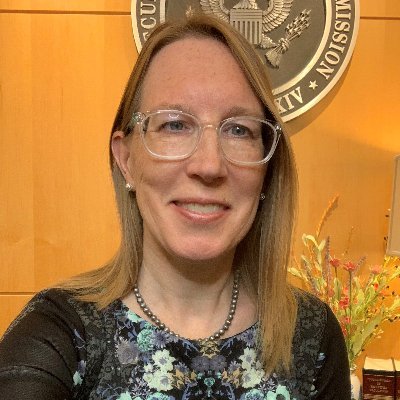
Hester Peirce posted her SEC resignation, with 2 October reported as her last day
@HesterPeirce posted a photo of a resignation letter with the caption “T minus 7.” CoinDesk and American Banker report that the letter sets 2 October 2026 as her last day as a commissioner and that she will join Regent University School of Law as an associate professor in November. American Banker says the White House has not named a successor. Unchained reports that Chairman Paul Atkins and Commissioner Mark Uyeda would then be the only sitting members. The caption itself does not state the date. The departure is announced. It does not say who will handle crypto policy after she leaves.
Why it matters Peirce has been the commissioner most associated with the SEC’s crypto work, including its crypto task force. Her reported exit next week would leave a two-member commission. That is a reason to watch who is nominated, and which crypto matters the remaining commissioners actually take up.
Hester Peirce has been an SEC commissioner since January 2018. Her second term expired in June 2025, and she stayed on while no successor was confirmed. Regent University said in May that she would join its law faculty in November, so the move was expected before the date was posted. The same day, staff in the SEC Division of Corporation Finance published FAQs dated 25 September 2026 on token buybacks, liquid-staking receipts, and when upkeep of an already working network is a securities promise. Those answers are staff views. The Commission has not adopted them as a rule, and the page gives a date but not a clock time. Separately, the Blockchain Association said Friday that chief executive Summer Mersinger’s last day is 16 October 2026.
Blockchain Association CEO Summer Mersinger will leave on 16 October
The Blockchain Association said Friday that chief executive Summer Mersinger’s last day is 16 October 2026 and that she will stay on as an adviser through the end of the year. Former chief executive Kristin Smith will return as interim chief executive. Smith is president of the Solana Policy Institute. That institute’s communications director, Emily Wilson, told The Block that Smith’s Solana role continues, and that the association post starts on 17 October as an added job. CoinDesk reported that she will keep the Solana post.
Why it matters The main U.S. crypto trade group is changing leaders after the Senate failed to advance the market-structure Clarity Act, the timing CoinDesk and Bloomberg both highlight. Smith’s second job ties that lobbying seat to the Solana Policy Institute. The 16 October date is announced.
Mersinger, a former Commodity Futures Trading Commission commissioner, led the Blockchain Association through passage of the GENIUS Act stablecoin law. Smith was the association’s chief executive from its 2018 launch until she left for the Solana Policy Institute, and CoinDesk says she kept the association’s board presidency. Bloomberg describes the Clarity Act’s Senate loss as less than two weeks before Friday’s announcement. These reports quote a Friday statement. They are not a new statute or a confirmed change in Solana policy.




 @RobinhoodApp said Robinhood Earn’s vault now holds more than $500 million and is the largest vault on


